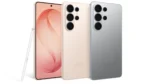
Samsung may be preparing a mobile display that revisits 3D, but avoids the compromises that killed it a decade ago.
Posts from X user @phonefuturist and a longer insider-style writeup describe an “H1” or MH1 panel built on Samsung’s so-called 3D Plate technology. The pitch is simple on paper: glasses-free depth, visible from multiple angles, without sacrificing normal screen quality.
That last part is what makes this different.
A layered approach instead of a lens trick
Earlier 3D phones relied on lenticular lenses or parallax barriers. Those physically split the image, reducing resolution and introducing blur. The new leak describes something closer to a “holographic layer” embedded directly into the AMOLED stack.
This layer is said to use nano-structured optics and diffractive beam steering. In practice, that would redirect light differently to each eye, creating depth without the need for a visible filter on top of the screen.
Eye-tracking is a key piece. By knowing where the user is looking, the system can adjust the light field in real time. That allows for more stable depth and fewer viewing-angle limitations, one of the biggest flaws of older implementations.
There’s also mention of tilt-based interaction. Instead of locking users into a fixed sweet spot, the display could update perspective dynamically as the phone moves. Think of it less like watching 3D content, and more like peering around a digital object.
Full resolution in 2D still matters
One claim stands out: no clarity loss in standard use.
If accurate, the panel would operate like a normal 4K-class AMOLED for everyday tasks, only activating the holographic effect when needed. That avoids the constant trade-off between novelty and usability that plagued devices like the HTC Evo 3D or Nintendo 3DS.
It also suggests the 3D system isn’t always-on hardware, but a selectively engaged optical mode layered onto a conventional display.
That’s a meaningful shift.
Context around Samsung’s timing
Samsung isn’t starting from zero here. The Samsung Advanced Institute of Technology has published research into slim-panel holography for several years. Moving that work into a shipping mobile panel would be a logical next step, especially as spatial computing becomes a broader industry focus.
The timing also lines up with growing chatter around Apple exploring “spatial” features beyond headsets. While those rumors remain unverified, Samsung pushing first with hardware-level depth would fit its pattern of leveraging display innovation as a differentiator.
This wouldn’t be about replacing AR headsets. It’s about shrinking some of that experience into a device people already carry.
What this could actually change
If the leaks hold, the most immediate use case isn’t movies. It’s interfaces.
Floating UI elements, spatial avatars, and depth-aware notifications could change how information is layered on a phone screen. Video and gaming would follow, but productivity and communication may benefit first.
Still, there are open questions. Power consumption is one. So is content support. And then there’s cost, especially if this requires new manufacturing steps in already complex OLED production.
Samsung has tried 3D on mobile before, and the market moved on quickly. This time, the company appears to be betting on a quieter shift—one that doesn’t ask users to choose between novelty and clarity, but tries to merge both into the same panel. Whether that balance holds at scale may decide if “spatial phones” become a category or another short-lived experiment.