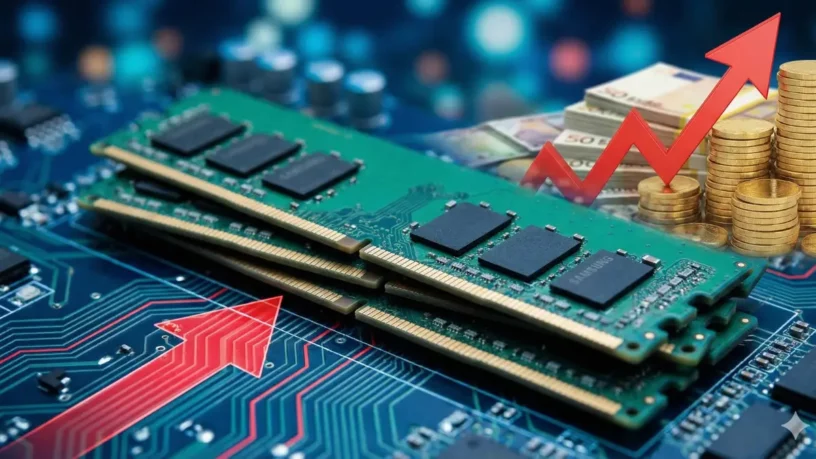
Samsung’s DDR4 memory prices have emerged as the latest development in the global memory market, as RAM price hikes now spread to DDR4 amid tight supply and strong demand. The move comes at a time when DRAM contract pricing across multiple generations is surging because of AI-driven demand and constrained production capacity. Report indicate Samsung’s contract pricing for 16 GB DDR4 DRAM has climbed significantly alongside DDR5 increases, compelling OEMs to absorb higher costs.
Samsung Expands Price Hikes to DDR4 Memory
Samsung’s latest pricing adjustments reveal that DDR4 memory is no longer insulated from the broader memory supply crunch. According to X user @jukan05‘s report, the company raised the contract price of 16 GB DDR4 DRAM to approximately $18, a level that closely tracks the surge seen in DDR5 contract pricing. Previously, DDR4 was expected to remain a relatively affordable alternative to DDR5, but recent data shows its price rising as production capacity shifts toward newer and high-bandwidth memory segments.
Industry analysts note that this expansion of price increases affects not only Samsung DDR4 memory but the broader RAM product mix, as manufacturers prioritize high-margin AI-oriented memory. The transition has driven contract rates upward across both consumer and enterprise DRAM products.
Market Impact: RAM Price Hike Now Spreads to DDR4 and DDR5
The RAM price hike now spreading to DDR4 is significant because DDR4 has traditionally been cheaper than its successor, DDR5. With DDR4 prices climbing, many system builders and OEMs are facing elevated BOM (bill of materials) costs, which could translate into higher prices for end products like laptops, desktops, and servers. Samsung’s broader strategy to optimize DRAM pricing reflects tight supply, aggressive AI memory demand, and a shift away from legacy production.
Sapphire PR: Expect DDR5 Memory Prices to Cool in Six Months
In a related industry perspective, Sapphire PR’s comment about DDR5 memory price cooling offers a somewhat optimistic outlook for the broader memory market. Edward Crisler, PR manager at Sapphire, recently told Hardware Unboxed that DRAM prices—including DDR5—may begin to stabilize and potentially cool within the next six to eight months, helping reduce extreme volatility in the RAM market. Crisler added that while prices may not immediately drop to desired levels, the trend toward stabilization could ease pricing pressures.
What This Means for Consumers and OEMs
With Samsung increasing DDR4 memory prices and the RAM price hike now spreading to DDR4, retail buyers and OEMs may start to see ripple effects across the PC and server industries. Higher memory costs could influence pricing strategies for devices and compel manufacturers to manage inventory more strategically. The potential cooling of DDR5 prices, as suggested by Sapphire’s PR comment, could eventually offer relief—especially for high-end system builders and enthusiasts awaiting more favorable market conditions.