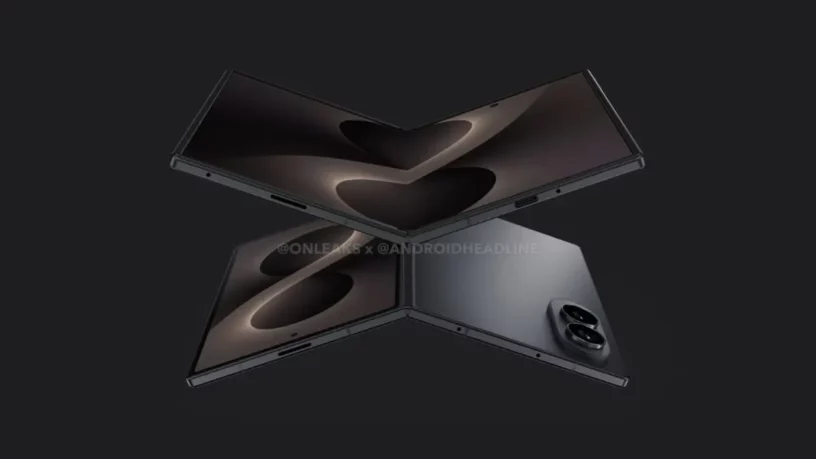
A new leak tied to Samsung’s next foldables points to two late-stage changes: a revised naming strategy and continued progress on display crease control. The details come from Ice Universe, who shared the information via X.
According to the leak, Samsung has quietly reworked its plans for branding the Galaxy Z Fold8 lineup. What was previously expected to launch as the standard Galaxy Z Fold8 may now carry the “Ultra” designation instead. At the same time, a variant previously referred to as the “Fold 8 Wide” is now expected to take the base Galaxy Z Fold8 name.
The timing stands out. Ice Universe claims this decision was made only recently, suggesting Samsung could still be fine-tuning its product positioning ahead of launch.
Crease improvements draw comparisons to OPPO
Beyond naming, the leak also touches on hardware refinements—specifically, the display crease. Samsung’s foldables have steadily improved in this area, but visible creasing remains one of the category’s most persistent drawbacks.
Ice Universe states that crease control on the Galaxy Z Fold8 series is now “just as impressive” as what’s seen on OPPO’s Find N6. That comparison is notable. OPPO’s recent foldables have been widely regarded for minimizing crease visibility, both visually and to the touch.
Context around the naming change
Samsung has used the “Ultra” label across its Galaxy S lineup to signal top-tier hardware, including larger displays, higher-end camera systems, and premium materials. Extending that branding to the Fold series could indicate a clearer segmentation strategy.
It also raises questions about differentiation. If the Fold8 Ultra becomes the flagship foldable, the standard Fold8—formerly “Wide”—may serve as a slightly more accessible option, potentially with adjusted dimensions or features.
What this could mean in practice
For buyers, the naming shift could simplify—or complicate—the lineup depending on execution. An “Ultra” foldable implies a no-compromise device, likely at the top end of Samsung’s pricing structure. The base Fold8 might then appeal to users who want a large-screen foldable without stretching to the highest tier.
The crease improvements, if validated, could have a more immediate impact. Reduced visibility and smoother touch interaction directly address one of the most common criticisms of foldables. It’s a change users will notice within minutes of use.
Samsung’s foldables already lead in global market share. Matching rivals on crease quality removes one of the few areas where competitors still hold a clear edge.
The bigger question is how far Samsung is willing to push differentiation between the Fold8 and Fold8 Ultra—especially if the naming overhaul arrived this late in development.