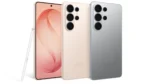
Samsung’s next book-style foldable could finally address one of the category’s longest-running limitations: battery capacity.
Newly surfaced battery data from Galaxy Club points to a 5,000 mAh advertised capacity for the upcoming Galaxy Z Fold successor, expected to launch in July 2026. If accurate, this would mark the largest battery ever fitted in a standard Galaxy Z Fold device — and the first meaningful bump in years.
The move would also bring Samsung’s foldable in line with its Ultra-tier flagships.
Biggest battery ever in a standard Fold
According to the leaked specifications, the device carries a rated combined capacity of 4,845 mAh, split across two cells: 2,369 mAh and 2,485 mAh. That translates to a typical marketed capacity of 5,000 mAh.
For context, the current Galaxy Z Fold 7 is capped at 4,400 mAh. That’s a substantial gap in a category where power efficiency is constantly strained by large internal displays and high-refresh-rate panels.
The rated 4,845 mAh capacity also mirrors that of Samsung’s Ultra-class phones. The Galaxy S26 Ultra, for example, is listed with a 4,855 mAh rated capacity and a 5,000 mAh advertised figure. In practical terms, the Fold would no longer trail Samsung’s slab-flagship models in raw battery capacity.
There is, however, a possible alternate configuration. A 2,393 mAh cell has reportedly been tested, which could result in an advertised capacity of slightly less than 4,900 mAh. That variant may be shared with a separate “Fold Wide” model, reportedly codenamed H8.
Either way, this is a meaningful step up.
Camera system aligns closer to Ultra models
Battery isn’t the only area seeing attention. The Fold 8, internally referred to as Q8, is tipped to feature a 200 MP main camera — the same sensor class used in the Galaxy S25 Ultra.
That’s a major shift for Samsung’s foldable line, which has traditionally trailed the Ultra series in primary camera hardware.
The ultra-wide camera is also expected to jump to 50 MP, matching the Galaxy S25 Ultra. Interestingly, that would make it more advanced on paper than the expected 12 MP ultra-wide rumored for the standard Galaxy S26 and S26+ models.
The telephoto lens remains at 3× optical zoom but moves to a 12 MP sensor, aligning with upgrades anticipated across the S26 lineup.
Front-facing cameras tell a different story. Both the cover screen and inner display cameras are listed at 10 MP. Samsung moved away from 10 MP selfie sensors in its S series after the Galaxy S23 generation, so this could signal a more conservative approach for the Fold’s front hardware.
Real-world impact
A jump from 4,400 mAh to 5,000 mAh may not sound dramatic on paper, but in foldables, it matters. Larger inner displays, multitasking, and sustained high brightness all drain power quickly.
More capacity means longer split-screen sessions, better endurance for productivity use, and potentially less aggressive thermal throttling during heavy tasks. It also narrows one of the last remaining spec gaps between the Fold line and Samsung’s Ultra phones.
Still, capacity alone doesn’t guarantee better battery life. Display efficiency, chipset improvements, and software tuning will ultimately determine real-world gains.
If these details hold, Samsung’s 2026 Fold won’t just be thinner or lighter. It could finally match its Ultra siblings in both battery size and camera hardware — raising a different question altogether: will pricing climb alongside the specs?