Google will flag Android apps with excessive battery use in the Play Store, marking a major shift in how the Play Store handles energy-draining apps. These warnings aim to protect users from apps that run unnecessary background processes, trigger constant wake locks, or consume abnormal power. For developers, this means stricter monitoring, and for users, it means better battery health and longer screen-on time.
Starting March 1, 2026, if an app exceeds the bad-behaviour threshold for the new ‘Excessive Partial Wake Locks’ metric, the Google Play Store may exclude the app from prominent discovery surfaces — and in some cases display a warning on the store listing to inform users the app may cause excessive battery drain.
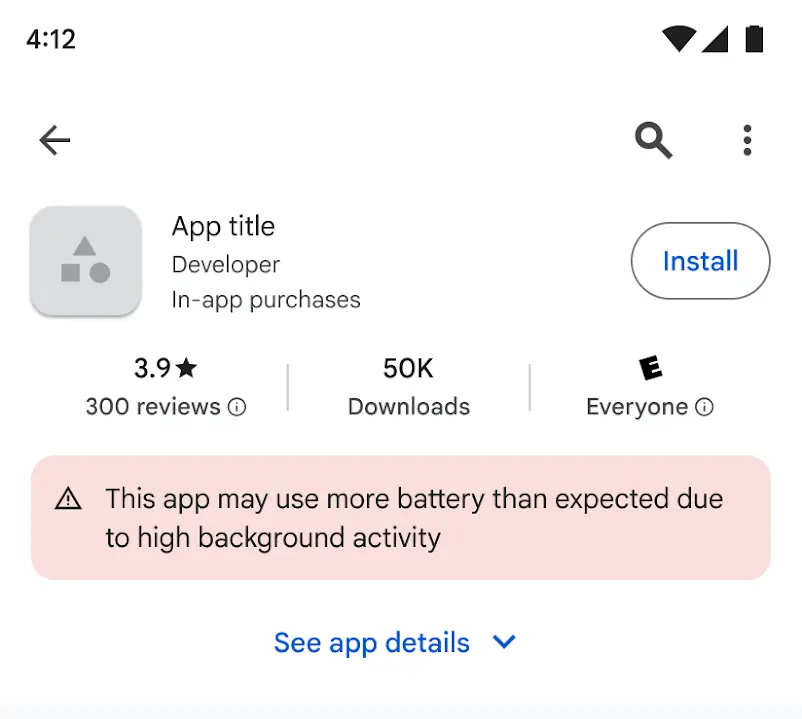
Why Google Is Flagging Battery-Draining Android Apps
Google is introducing battery-usage alerts to reduce energy waste and improve everyday device performance. The system detects apps that:
- Consume disproportionate power compared to similar apps
- Abuse background services or foreground notifications
- Trigger frequent network pings or location checks
- Keep the CPU awake through wake locks
- Cause abnormal overnight battery drain
These automated checks enhance user trust and highlight apps that follow Android’s newer power-efficient APIs, such as Doze Mode, App Standby Buckets, and optimized background limits.
For developers, the key takeaway is simple: apps now need to follow modern battery-usage standards or risk being flagged, down-ranked, or warned to users before installation.
Impact on Developers and Users
- Developers
- Must optimize location, network, and background tasks
- Should adopt JobScheduler, WorkManager, and FCM push notifications
- Need to reduce the continuous sensor usage
- Users
- Gain early warnings about power-hungry apps
- Can avoid apps with poor battery management
- Experience fewer overnight drains and longer overall battery life